

Africa's digital economy is expanding rapidly, with companies embracing cloud technologies, AI, digital platforms and connected ecosystems to drive innovation at scale. But, as these digital opportunities grow, so do the cyber risks that accompany them.
Traditionally, cybersecurity efforts have focused on responding to incidents after they have already occurred, but, given the sophistication and evolution of modern cyber threats, that approach is no longer sufficient.
Cyber Threat Intelligence (CTI) allows businesses to anticipate threats more effectively by collecting, analysing and interpreting information about existing risks. This enables companies to make informed decisions and strengthen their security posture before incidents occur, which allows for speedier mitigation efforts, according to MTN’s Group Technology Whitepaper on Cyber Threat Intelligence. CTI enables businesses to develop a targeted approach to cyber threats.
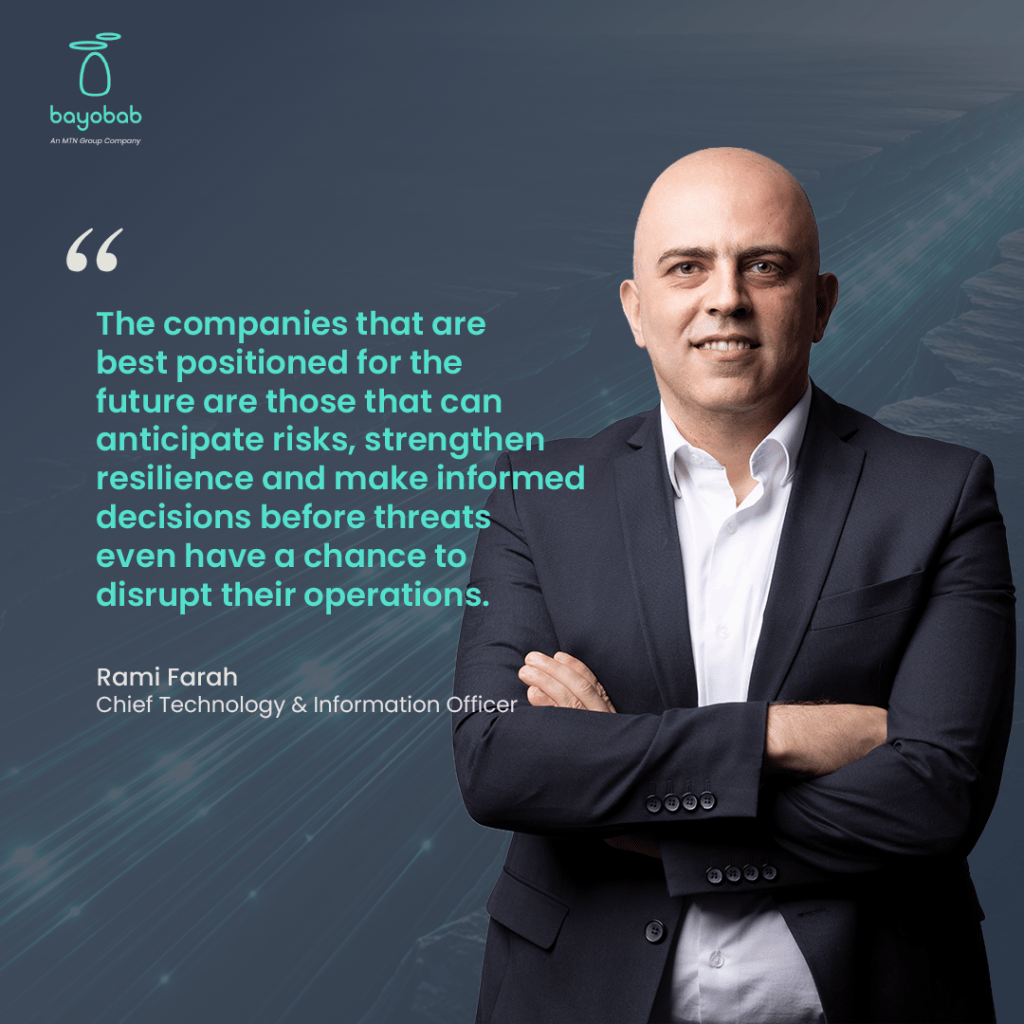
‘Digital infrastructure is critical to economic growth, which means cybersecurity has to become a business priority rather than a technology concern,’ says Bayobab Chief Technology and Information Officer Rami Farah. ‘Today, cybersecurity is about preparation. The companies that are best positioned for the future are those that can anticipate risks, strengthen resilience and make informed decisions before threats even have a chance to disrupt their operations.’
The rise of artificial intelligence is reshaping the cybersecurity landscape. While AI presents significant opportunities for innovation and efficiency, it also changes how threat actors operate. Advanced technologies can be exploited to automate attacks, identify vulnerabilities and operate at scale. Simultaneously, there are greater opportunities for companies to leverage AI to improve threat detection, turning data into actionable insights to protect services and assets. Predictive analytics help security teams identify anomalies faster and gain visibility into potential risks.
Cybersecurity has also become a vector in geopolitics, with global conflicts affecting how organisations should manage cyber threats. Coordinated groups deploy emerging technologies to disrupt critical services, deliver advanced persistent threats and gather information for further attacks, placing the onus on companies to manage both commercial and political risk exposure. Regulatory compliance is more important than ever.
As Africa's digital landscape expands, businesses across the continent will need greater visibility into emerging threats and stronger collaboration to protect critical infrastructure, services and data. No organisation can address this threat landscape in isolation. Information-sharing across industries, regions and communities is a critical component of modern cybersecurity programmes. By working together and sharing intelligence on threats, companies can strengthen collective defence and improve response speed.
For businesses across Africa, cybersecurity needs to be at the core of growth and scale. Expanding digital adoption, rising connectivity and increasing geopolitical influences create a complex threat environment that requires constant vigilance and agility. ‘Trust is one of the most valuable assets in the digital economy and protecting that trust requires companies to view cybersecurity as a continuing commitment to resilience, collaboration and innovation, not a once-off programme, or something owned by the technology department alone,’ says Farah.


